


Batteries and Beyond: How Storage Changes the Game in Smart Grids
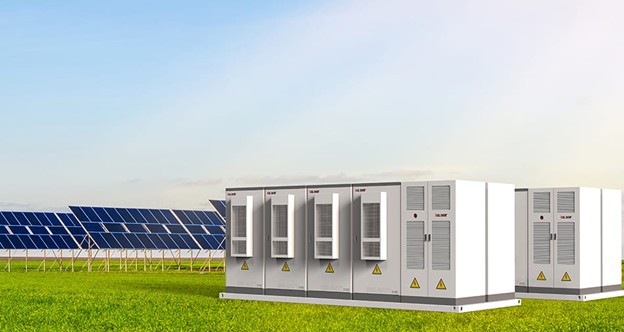
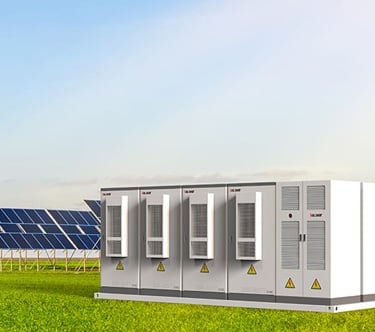
The global energy sector faces a fundamental paradox: while the world moves towards the massive adoption of renewable energy sources like solar and wind, the intermittent nature of these sources threatens grid stability. Simply put, energy is produced when the sun shines or the wind blows, not necessarily when consumers need it.
This gap between generation and demand has been the major obstacle in the energy transition. Today, that gap has a name: Energy Storage. This technology is not just a complement, but the essential infrastructure that converts a passive grid, designed for permanent power plants, into a true Smart Grid, capable of managing energy flow actively and bidirectionally.
The grid's intermittency due to the renewable energy boom makes it imperative to ensure firm generation, meaning the capacity to deliver electricity continuously and predictably. For this, storage must go beyond traditional lithium batteries.
Argentina's Strategic Potential: Lithium and PHS
Argentina is not merely an observer in this revolution, but a key player. Its storage potential is articulated in two critical dimensions:
Raw Material (Lithium):
Argentina is part of the "Lithium Triangle" along with Chile and Bolivia, possessing one of the largest global reserves of this mineral.
This strategic position gives it an unparalleled advantage to be a fundamental provider in the global value chain of Lithium-Ion (Li-ion) batteries, the most used short-duration storage technology today due to its energy density.
Installed Capacity (PHS):
Besides lithium, the country has an ideal geography for Pumped Hydro Storage (PHS).
PHS offers massive storage capacity (gigawatt-hours), which would provide inertia and stability to the Argentine Interconnection System (SADI), making it the ideal long-duration complement for wind and solar intermittency.
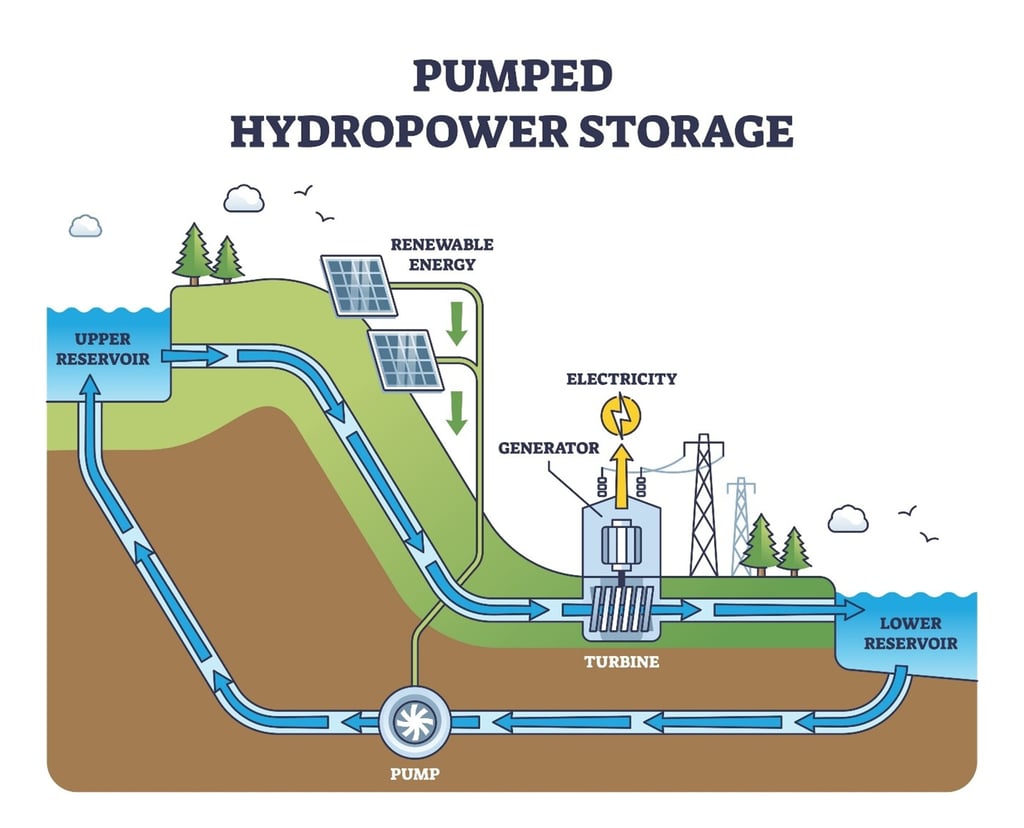
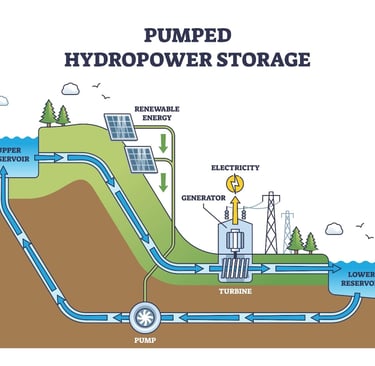
What is Pumped Hydro Storage (PHS)? It is a system that uses excess electricity to pump water to an upper reservoir and releases it to generate energy when needed. This solution offers massive capacity and a long useful life.
On the horizon, the applications of Green Hydrogen as an energy vector for seasonal storage are being intensely studied, although its massive application still presents challenges due to its high costs and efficiency.
Storage translates into concrete strategic benefits at all system levels:
For homes and businesses: It allows for Peak Shaving, the strategy of storing self-generated or cheap energy to use it during times of higher tariffs.
At the grid level: Storage gives renewable power plants the capacity to be "dispatchable," eliminating intermittency and ensuring system reliability.
A global example of this is Australia, which with the Hornsdale Power Reserve (one of the world's first grid-scale lithium batteries) demonstrated this technology's capacity to stabilize the grid ultra-fast after faults and manage high wind penetration. Inspired by this model, community batteries have emerged as a real trend and one of the alternatives governments are promoting to mitigate the challenge of intermittency generated by the growing distributed generation from homes themselves, allowing entire neighborhoods to share a centralized battery, which makes storage more accessible and economical for all residents.
The energy future is flexible, decentralized, and, above all, stored. The capacity to save today's energy for use tomorrow is the key to resilience and efficiency.
North Delegation
Federico Rossi 600 - Yerba Buena, Tucumán, Argentina
+54 9 11 6422-0088
info@smartenergysolutions.com.ar
Subscribe for the latest news
South Delegation
Los Pinos 1758 - Cipoletti, Río Negro Argentina
+54 9 11 6438-8507
info@smartenergysolutions.com.ar